Sep 30, 2026
Today marks the National Day for Truth and Reconciliation, and Prime Minister Mark Carney’s signature approach to Indigenous relations is facing pushback from someone who helped write the road map.
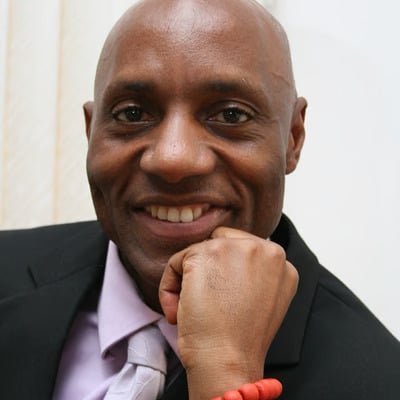
Wilton Littlechild, who co-chaired the Truth and Reconciliation Commission (TRC), told The Canadian Press that economic reconciliation remains key — but not the way Carney sees it. “Right now, it’s like a four-legged stool with one leg missing,” he said. The missing leg, Littlechild explained, is true and meaningful respect for Indigenous rights.
Advertisement
This isn’t only a political debate. Ottawa is backing Indigenous equity stakes with taxpayer-guaranteed loans, and many Canadians hold pipeline, utility and infrastructure companies in their RRSPs, TFSAs and pension plans. If these partnerships fall apart, the cost would reach far beyond Parliament Hill.
Thanks for subscribing!
The best of Money.ca delivered weekly.
By signing up, you accept Money.ca Terms of Use, Subscription Agreement, and Privacy Policy.
What is Ottawa actually offering?
At the heart of these efforts is the Indigenous Loan Guarantee Program (ILGP), run by the Canada Indigenous Loan Guarantee Corporation (CILGC), a federal Crown corporation. Carney doubled the program to $10 billion in March 2025, and guarantees range from $20 million to $1 billion.
Then there’s Trans Mountain. The federal government has offered Indigenous groups a collective 15% stake in the federally owned pipeline, financed through a low-cost government loan. Signing on also brings a $2.5 million payment per First Nation, which some critics within those communities reportedly consider a bribe to secure approval.
All of this runs alongside Bill C-39, the Building Canada Strong Act. The government describes its benchmark as “one project, one review, one year.”
Must Read
- Are you paying too much for car insurance? Here are 3 clever ways to slash your monthly bill
- Here are 5 'must-haves' that Canadians constantly overpay for. How many of these are sabotaging your budget every single month?
- Here are the 5 biggest differences between rich and poor Canadians — which side do you fall on?
Join 19,000+ readers and get Money.ca’s best stories and exclusive interviews first — clear insights curated and delivered weekly. Subscribe now.
Why do critics say the plan is off track?
Littlechild argues that fast-tracking approvals sidelines Indigenous rights and traditional economies such as hunting, fishing and trapping.
Hayden King, executive director of the Yellowhead Institute, says Carney shares former prime minister Stephen Harper’s push for rapid resource development but relies on incentives where Harper relied on confrontation. King told The Canadian Press the TRC called for fixing the relationship first and talking partnerships second, and that real consent requires knowing all the details before deciding.
Indigenous Services Minister Mandy Gull-Masty disagreed with that assessment, pointing to broader institutional reforms, such as overhauling child and family services, as evidence of systemic progress alongside economic efforts.
A report from RBC Thought Leadership, the research arm of the Royal Bank of Canada, adds a financial caveat: “Equity is not inherently equivalent to consent.”
What does a loan guarantee save — and who carries the risk?
Carney’s first deal shows how the math works. In July 2025, a partnership of 38 First Nations in British Columbia bought 12.5% of Enbridge’s Westcoast pipeline for about $736 million. The $400 million guaranteed portion carries a 4.517% yield, while the unguaranteed portion pays 5.168%. That lower rate saves the communities roughly $2.6 million a year in interest.

Advertisement
Because communities typically borrow the full purchase price, even a small rate difference adds up. But a guarantee is not a grant. If a deal fails, Canadian taxpayers are on the hook.
Uptake is also slow. Across four programs, 26 deals worth about $1.8 billion have closed, using roughly 11% of available capacity. RBC also warns that riskier projects, such as liquefied natural gas (LNG), mining and small modular reactors, fall outside what these programs were built to handle.
Why should everyday investors care?
The Major Projects Office has already fast-tracked 17 projects worth $126 billion. Capital markets now treat Indigenous partnership as a condition of project viability, and most projects on the national list sit on or next to Indigenous lands.
If communities feel steamrolled, projects can end up in court, causing costly delays. Even agreed deals take time to finish: in March 2022, 16 First Nations signed options to buy a 10% stake in the Coastal GasLink pipeline, exercisable only once it entered service, and no closing has been publicly announced.
What to do now
You don’t need to take a side in the political debate to protect your investments. Consider these steps:
- Check what you own. Look at your ETFs and pension statements for pipeline, utility and LNG exposure.
- Distinguish signed agreements from open proposals. A completed equity deal offers certainty; a letter of intent does not.
- Track Bill C-39. Watch how it changes as it moves through Parliament, and watch for any related court challenges.
- Follow public reporting. Keep an eye on CILGC’s guarantee announcements, given that taxpayers share the risk.
Deals like Westcoast show Indigenous ownership can work. The open question is whether Carney’s push for speed leaves room for the consent those deals depend on. When you’re sizing up a major project, look first at whether its Indigenous partners have signed on, and whether that agreement looks durable.
You May Also Like
- This 7-step plan from Dave Ramsey is designed to help you ditch debt, save more and build wealth — here’s how it works
- Prioritize these 4 critical investments and watch your net worth skyrocket
- Here are 8 solid money moves that could free up real cash every month — here's where to start
- Millionaires under 43 are reshaping investing — just 25% of their portfolios are in stocks. Here’s where their money is going
The most expensive financial mistakes are often the ones you don't see coming. Join 19,000+ Canadians who get the money moves, risks and opportunities shaping their finances — delivered free each week. Subscribe now.

Leslie Kennedy served as an editor at Thomson Reuters and for Star Media Group, followed by a number of years as a writer and editor and content manager in marketing communications, before returning to her editorial roots. She is a graduate of Humber College’s post-graduate journalism program and has been a professional writer and editor ever since.